

Emergency Preparedness Mistakes Most Beginners Make
Emergency preparedness is often framed around extreme events, but most emergencies are far more ordinary. Power outages, supply disruptions, weather events, short-term income interruptions, and infrastructure delays are far more common than catastrophic scenarios.
Effective emergency preparedness focuses on reducing stress and disruption when normal systems pause. Unfortunately, many households make avoidable mistakes that undermine even well-intentioned efforts.
Below are seven of the most common emergency preparedness mistakes and practical ways to avoid them.
1. Waiting for a Crisis to Start Preparing
One of the biggest emergency preparedness mistakes is waiting until a crisis is already happening to take action. When an emergency begins, access to supplies, information, and services becomes limited very quickly.
Store shelves empty faster than expected. Delivery timelines extend. Stress leads to rushed decisions and overspending.
Preparedness works best when it is done early and calmly. Small steps taken in advance, such as building a basic emergency supply kit or storing extra water, dramatically reduce last-minute pressure. The goal is not to predict emergencies, but to acknowledge that disruptions are normal and plan before urgency removes options.
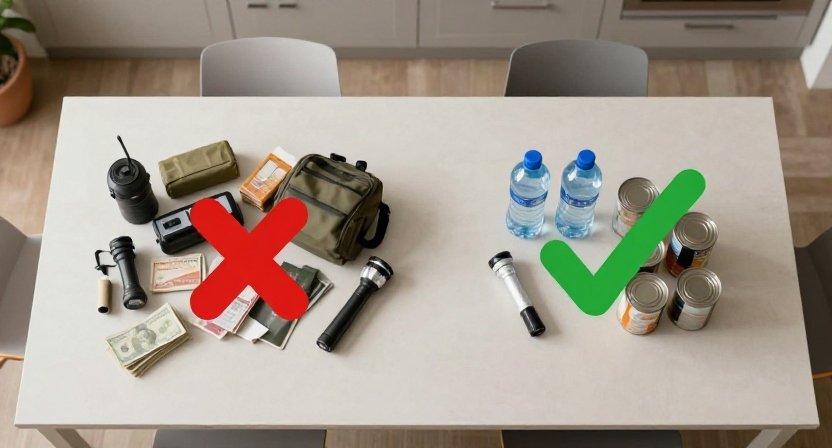
2. Focusing on Gear Instead of Basic Needs
Emergency preparedness is often marketed around equipment. Flashlights, radios, solar chargers, and specialty tools receive significant attention. While tools can be helpful, they do not replace the fundamentals.
The most important emergency preparedness basics are water, food, shelter, and basic power. Without these, gear offers limited value. A household with adequate water and food can handle many disruptions even with minimal equipment.
A practical approach is to secure essentials first, then add tools only when they support a specific need. Preparedness should be built around necessities, not accessories.
3. Underestimating Emergency Water Needs
Water storage is one of the most commonly underestimated areas of emergency preparedness. Many households rely on a small supply of bottled water without accounting for daily usage beyond drinking.
Water is needed for cooking, hygiene, sanitation, and basic cleaning. Even short-term disruptions can make water access unreliable due to boil notices, infrastructure repairs, or power outages.
Effective emergency water storage focuses on realistic daily needs rather than minimum survival estimates. A modest water buffer provides flexibility and peace of mind during common disruptions.
4. Buying Emergency Food You Don’t Normally Eat
Another frequent emergency preparedness mistake is buying food solely for storage rather than usability. Stockpiling unfamiliar or extreme foods often leads to waste, expiration, and frustration during emergencies.
The most reliable emergency food storage mirrors everyday eating habits. Shelf-stable versions of foods you already consume integrate naturally into normal routines and rotate automatically over time.
Preparedness should simplify decisions during a disruption, not introduce unfamiliar foods or cooking methods when stress is already high.
5. Not Rotating Emergency Supplies
Emergency supplies degrade quietly over time. Food expires, batteries lose charge, medications age, and packaging deteriorates. Without simple rotation, stored supplies may not function when needed.
Rotation does not require complex systems. Periodic checks, seasonal reminders, or using stored items as part of regular household consumption are often sufficient.
Emergency preparedness is not a one-time purchase. It is a light maintenance habit that preserves reliability.
6. Overcomplicating Emergency Plans
Complex emergency plans are difficult to follow under stress. Detailed systems with multiple contingencies often fail when attention, energy, and time are limited.
The most effective emergency preparedness plans are short, written, and easy to understand. They answer basic questions clearly:
What supplies do we have?
Where are they stored?
How do we communicate?
What happens first?
If a plan is difficult to explain, it is likely difficult to execute. Simplicity improves reliability.
7. Ignoring Financial Emergency Preparedness
Many emergencies are financial before they are physical. Delayed income, unexpected expenses, or limited access to funds can cause significant disruption even during minor events.
Financial preparedness includes basic liquidity, awareness of recurring expenses, and access to funds when systems are disrupted. This does not require complex financial strategies. Even a small cash buffer can prevent cascading problems.
Emergency preparedness is incomplete without financial readiness. Stability during disruptions often depends more on cash flow than supplies.
Why These Emergency Preparedness Mistakes Matter
These mistakes share a common cause: confusing preparedness with intensity rather than structure. Effective emergency preparedness is not about fear, extremes, or stockpiling. It is about reducing friction when normal systems pause.
Preparedness works best when it is calm, boring, and integrated into everyday life. When done correctly, it is rarely noticed. When done poorly, small disruptions become stressful and expensive.