

Water: How Much You Need and Why It Matters
Water is the most critical resource during an emergency. When normal services are disrupted, access to safe water can become limited or unavailable, making even basic daily activities difficult.
Emergency preparedness guidance from organizations such as Federal Emergency Management Agency and the Centers for Disease Control and Prevention consistently identifies water as the first priority in emergency planning.
This guide explains how much emergency water households should plan for, how water is used during emergencies, and why proper water planning is essential.
Why Emergency Water Is Important
During emergencies, water access may be affected by:
power outages
infrastructure damage
contamination or boil-water advisories
limited access to stores or deliveries
Without reliable water, households may struggle with hydration, food preparation, hygiene, and sanitation. Because water supports so many essential functions, it becomes the foundation of emergency preparedness.
Emergency water planning is not about comfort. It is about maintaining basic health and safety when normal systems are unavailable.
How Much Emergency Water Do You Need?
A widely accepted emergency planning guideline is:
1 gallon of water per person per day
This recommendation is designed to cover:
drinking
basic food preparation
minimal hygiene and sanitation
It is not intended for full daily routines, but for essential use during emergency conditions.
Calculating Emergency Water for a Household
To estimate household needs, use this simple formula:
Number of people × Number of days × 1 gallon
Example Calculations
1 person × 3 days = 3 gallons
2 people × 3 days = 6 gallons
4 people × 3 days = 12 gallons
Many preparedness resources suggest starting with three days of water as a baseline. Some households choose to store additional water depending on space, climate, pets, or medical needs.
Water planning can always be expanded over time.
How Water Is Used During Emergencies
Emergency water is used for more than drinking. Understanding these uses helps explain why the recommended amount is higher than hydration alone.
Drinking and Hydration
Water is needed throughout the day to prevent dehydration, support energy levels, and maintain focus. Stress, heat, and physical activity during emergencies can increase hydration needs.
Food Preparation
Even simple emergency meals may require water for:
cooking dry foods such as rice or pasta
rehydrating shelf-stable items
mixing powdered foods or drinks
Without water, many shelf-stable foods become difficult or unsafe to prepare.
Basic Hygiene
Limited water is often used for:
hand cleaning
brushing teeth
basic personal hygiene
cleaning small cuts or wounds
Public health guidance from the Centers for Disease Control and Prevention emphasizes that hygiene plays an important role in reducing illness risk when sanitation systems are disrupted.
Sanitation and Cleaning
Small amounts of water may also be needed to:
clean food preparation surfaces
rinse utensils
manage spills or contamination
Emergency sanitation focuses on safety, not normal cleaning routines.
Emergency Water Storage Basics
Emergency water storage should prioritize safety, accessibility, and simplicity.
Recommended Storage Options
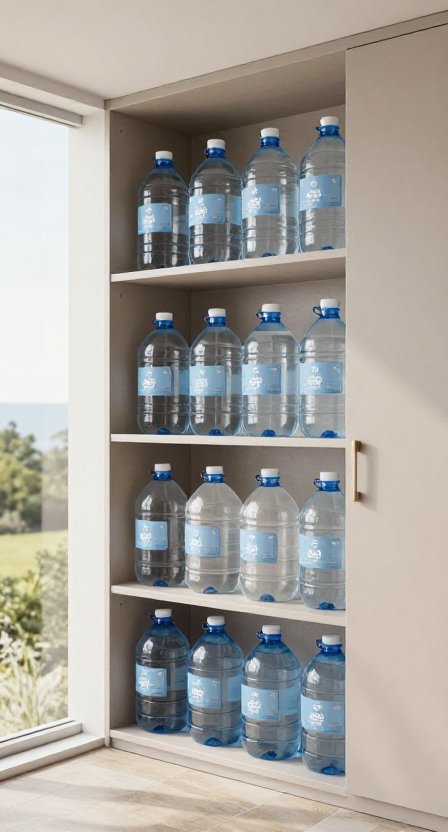
factory-sealed bottled water
store-bought water jugs
These options are beginner-friendly because they:
reduce contamination risk
require no preparation
are easy to inspect and replace
Where to Store Emergency Water
Water should be stored:
in a cool, dry location
away from direct sunlight
where containers are protected from damage
in a place that can be accessed without power
Emergency water should be ready to use immediately without treatment or setup.
Planning for Pets and Household Needs
Households with pets should plan additional water for:
pet drinking needs
food preparation
basic cleaning related to animals
Emergency preparedness guidance recommends planning separately for pet water rather than relying on shared household supplies.
Common Emergency Water Planning Mistakes
Beginners often underestimate water needs by:
planning for drinking only
assuming water will be available for hygiene
storing water that is difficult to access
not accounting for all household members
Using the 1-gallon-per-person-per-day guideline helps avoid these issues.
Key Takeaway
Emergency water planning is the foundation of preparedness. Water supports hydration, food preparation, hygiene, and sanitation when normal systems are unavailable.
A practical starting point for most households is:
1 gallon of water per person per day
stored in sealed containers
kept accessible and protected
reviewed periodically
Emergency preparedness does not require complexity. It starts with meeting essential needs reliably, and water is the most essential of all.