
Practical, Everyday Approach to Medical Preparedness
A home medical kit is not about rare emergencies or dramatic scenarios.
It exists to help you manage the small, common medical issues that happen at home and become more difficult when access to care is delayed, services are limited, or routines are disrupted.
Most medical preparedness needs are ordinary: minor injuries, pain, fever, mild illness, and temporary stabilization until professional care is available. A practical kit supports these needs quietly and reliably.
Preparedness works best when it is realistic.
Disclaimer:This content is provided for general informational and educational purposes only and does not constitute medical advice, diagnosis, or treatment. It is not a substitute for professional medical care or the guidance of a licensed healthcare provider.
Always seek the advice of a qualified medical professional regarding medical conditions, medications, or treatment decisions. In the event of a medical emergency, contact local emergency services immediately.
What a Home Medical Kit Is — and Isn’t
A home medical kit has a limited but important role. Its value comes from clarity, not capability.
A home medical kit is:
-
Designed for non-life-threatening, everyday issues
-
Intended for use by non-professionals
-
Focused on simplicity, familiarity, and accessibility
A home medical kit is not:
-
A trauma or emergency response kit
-
A replacement for professional medical care
-
A collection of tools you do not understand or feel comfortable using
Preparedness improves when expectations are clearly defined.
Start With Realistic Household Needs
Effective medical preparedness reflects what actually happens in daily life.
Most household medical needs fall into predictable categories:
-
Minor cuts, scrapes, and small burns
-
Pain, fever, and inflammation
-
Mild illness and short-term discomfort
-
Temporary stabilization while awaiting care
If an item is already used during normal life, it is far more likely to be useful during a disruption. Supplies that never get used often add complexity without improving readiness.
Preparedness works best when it mirrors reality, not hypotheticals.
Core First Aid Supplies for Home Use
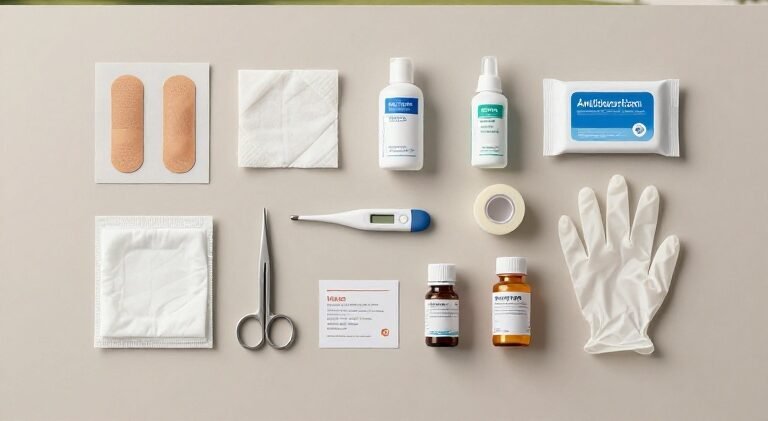
A practical home medical kit should support basic wound care and hygiene without unnecessary complexity.
Common essentials include:
-
Adhesive bandages in multiple sizes
-
Sterile gauze pads and medical tape
-
Antiseptic wipes or solution
-
Antibiotic ointment
-
Tweezers and small scissors
-
Disposable gloves
These items address the majority of everyday household injuries and can be used safely without specialized training.
Managing Pain, Fever, and Mild Illness
Disruptions often make routine discomfort harder to manage.
A practical kit typically includes:
-
Over-the-counter pain or fever reducers already used in your household
-
Cold or allergy relief appropriate for known needs
-
A thermometer for basic symptom monitoring
The purpose of these items is comfort and awareness, not diagnosis or treatment beyond labeled use.
Personalizing the Kit for Your Household
Medical preparedness is not one-size-fits-all.
Households should consider including:
-
Allergy medications
-
Backup supplies related to chronic conditions
-
Written medication lists and emergency contact information
Making this information accessible reduces reliance on memory during stressful moments and supports continuity if outside care is needed.
Storage, Organization, and Maintenance
A well-stocked medical kit is ineffective if it is difficult to find or poorly organized.
Best practices include:
-
Using a single, clearly labeled container
-
Storing it in a known, accessible location
-
Separating frequently used items from backup supplies
-
Checking expiration dates periodically
Preparedness often fails quietly when supplies expire or are misplaced.
Familiarity Builds Confidence
The most important part of a home medical kit is not what it contains, but whether you know how to use it.
Using items from your kit during normal life:
-
Keeps supplies current
-
Reduces hesitation during stressful moments
-
Builds confidence through familiarity
Preparedness improves through routine use, not accumulation.
Knowing the Limits Is Part of Preparedness
A home medical kit supports care. It does not replace professional treatment.
Preparedness includes:
-
Knowing when home care is appropriate
-
Recognizing when medical attention is needed
-
Avoiding interventions beyond your training or comfort level
Restraint is a form of readiness.
The Takeaway
A practical home medical kit:
-
Reflects real household needs
-
Supports continuity during short-term disruptions
-
Reduces stress and unnecessary escalation
-
Helps keep small problems manageable
Preparedness is not about doing more.
It is about being ready to do the right amount.
At ReadyLedger, medical preparedness means realism, responsibility, and calm decision-making.